Do You Need a Level 2 Charger at Home? (2025 Guide)
Why It Matters
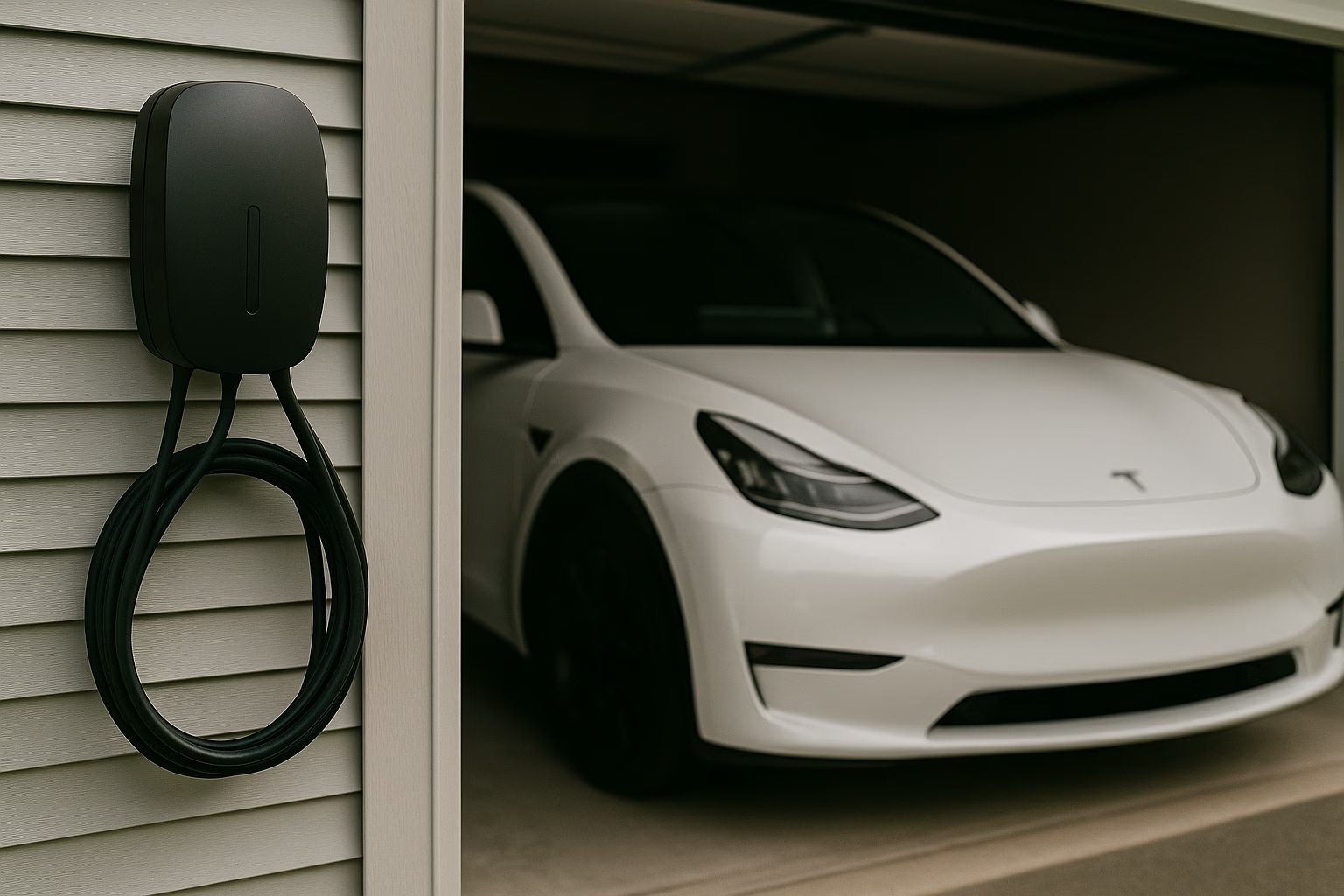
If you’ve recently bought an electric vehicle (EV), or are thinking about it, you might be wondering: Do I need a Level 2 charger at home? It’s a common question, especially for first-time EV owners who want the convenience of home charging but aren’t sure if the upgrade is worth it.
The truth is, while every EV can be charged from a standard wall outlet, a Level 2 charger can make your daily routine smoother, faster, and more flexible. In this guide, we’ll break down what a Level 2 charger is, who benefits most from installing one, and whether it’s a smart investment for your home and driving habits.
Affiliate Disclosure
This post contains affiliate links. If you click a link and make a purchase, we may earn a small commission at no extra cost to you. As an Amazon Associate, we earn from qualifying purchases.
What Is a Level 2 Charger?
A Level 2 charger is a faster way to charge your electric vehicle at home. While all EVs come with a basic Level 1 charger that plugs into a standard 120V outlet, it can take more than 24 hours to fully charge your vehicle, especially if you have a long-range battery. Level 2 chargers use a 240V connection (similar to a dryer or oven outlet), which dramatically reduces charging time.
Charging Speed Comparison:
| Charger Type | Charging Speed Estimate | Best For |
|---|---|---|
| Level 1 (120V) | ~3–5 miles of range per hour | Overnight top-offs, plug-in hybrids |
| Level 2 (240V) | ~20–30+ miles of range per hour | Daily driving, full EVs, fast recharges |
With a Level 2 setup, most EVs can go from empty to fully charged in 6–10 hours, which makes overnight charging realistic even for larger batteries.
Plug Types Matter: J1772, NACS, and CCS
When shopping for a Level 2 charger, one of the most important things to understand is the plug type your EV supports. Not all EVs use the same charging port, so choosing the right connector matters.
- J1772: This is the universal plug for nearly all non-Tesla EVs in North America.
- NACS (Tesla’s plug): Tesla uses its own connector, the North American Charging Standard (NACS), which is now being adopted more widely. Tesla drivers typically get an adapter to use J1772 chargers.
- CCS: The Combined Charging Standard (CCS) is mostly used for DC fast charging at public stations, but still good to understand when comparing vehicle compatibility.
Pro Tip: Always check your vehicle’s charging port before buying a charger, especially if you drive a Tesla or have a newer EV model using NACS. Some chargers now come with interchangeable connectors or built-in compatibility.
Who Should Get a Level 2 Charger at Home?
Not every EV owner needs a Level 2 charger at home, but for many drivers, it’s a game changer. If you rely on your EV daily or want the convenience of fast, reliable charging while you sleep, a Level 2 setup is often worth it.
You’ll benefit from a Level 2 charger at home if:
- You drive daily — especially longer commutes that drain more range
- Your EV is your primary vehicle and not just a backup or around-town car
- You have multiple EVs in your household
- You prefer to charge overnight while rates may be lower and your car is parked anyway
- You want to avoid relying on public charging stations for routine charging
Even if you don’t need a full charge every day, the faster charging time means you can top up quickly when needed and never worry about starting the day with low battery.
When a Level 1 might be enough:
If you drive very little each day (say, under 30 miles) and have ample overnight time to recharge, a standard Level 1 charger may suffice for your needs, especially if your EV has a smaller battery or you’re just starting with electric driving.
Benefits of a Level 2 Home Charger
Installing a Level 2 charger at home isn’t just about faster charging; it’s about making your EV experience smoother, more convenient, and more future-proof.
Faster Charging = More Flexibility
Level 2 charging means your vehicle is ready when you are. Instead of waiting 24+ hours to top off your battery, you can charge overnight and start every morning with a full charge, even after a long drive.
Better for Your Daily Routine
Forget the stress of hunting down public charging stations or juggling schedules to avoid running low. With a home Level 2 charger, you’re in control of when and how you charge.
Great for Future-Proofing
As EV batteries get larger and ranges increase, Level 1 chargers will struggle to keep up. A Level 2 charger helps you stay ahead, especially if you upgrade your EV in a few years or add another one to the household.
Possible Cost Savings Over Time
While there’s an upfront cost for installation, home charging is almost always cheaper than relying on public chargers. Some states and utility companies even offer rebates or incentives to help offset installation costs.
Pro Tip: Look for a smart charger that lets you schedule charging during off-peak electricity hours. This can help you save even more on your electric bill.
Things to Consider Before Installing
Before you buy a Level 2 charger, there are a few important things to check to ensure your setup is safe, compatible, and future-ready.
Electrical Panel Capacity
Level 2 chargers require a 240V circuit, like what powers your oven or dryer. You’ll need to make sure your electrical panel has room for a new circuit that can handle the additional load. An electrician can help you assess this.
Pro Tip: Some chargers support plug-in installation via a NEMA 14-50 outlet (like an RV plug), while others require hardwiring. If you don’t already have a 240V outlet in your garage, expect to pay extra for installation.
Location Matters
The closer your charger is to your electrical panel, the cheaper and simpler the install will usually be. Most people install chargers in their garage or carport, but outdoor-rated chargers are also available.
Smart Features vs. Simplicity
Some Level 2 chargers offer Wi-Fi or Bluetooth connectivity for scheduling, usage tracking, and app control. Others are simple “plug and charge” models. Smart features can be helpful but aren’t necessary for everyone.
Plug Type and Vehicle Compatibility
As mentioned earlier, always verify that your charger has the right connector for your vehicle or supports swappable cables/adapters if you own or plan to own multiple EV brands.
Affiliate Disclosure
Some of the chargers below include affiliate links. If you buy through them, we may earn a small commission at no extra cost to you.
Top-Rated Level 2 Chargers to Consider
Here are a few reliable and well-reviewed Level 2 home chargers that strike a balance between performance, durability, and value.
Grizzl-E Classic Level 2 EV Charger
Why we like it: Durable, weatherproof, and simple to use. No bells and whistles, just solid charging. It’s UL certified, comes with a 24-foot cable, and supports up to 40 amps.
Considerations: No smart features or app connectivity. Great if you want a tough, reliable charger that “just works.”
Port type: J1772 (works with most EVs; Tesla and other NACS EVs require an adapter)
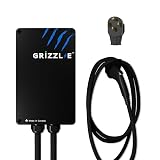
- Grizzl-E Classic NEMA 14-50 Plug with 24 Feet Premium Cable is a simple, powerful, heavy-duty and portable Electric Vehicle Charging Station which is suitable for normal and cold weather. Compatible with all EVs and PHEVs sold in North America.
- UL Full Tested and Certified. Eligible for Federal rebate program. IP67 (Water resistant), Fire resistant. Over Current, Over Voltage , Under Voltage, Missing Diode, Ground Fault, and Over Temperature Protections. Self-Monitoring and Recovery, Power Outage Recovery. Built in GFCI.
- Fast charging and adjustable amperage: 40A, 32A, 24A, 16A. Maximum current output of 40 Amps for 50A circuit breaker, 32 Amps for 40A circuit breaker, 24 Amps for 30A circuit breaker, or 16 Amps for 20A circuit breaker. Charge Rate: 28-30 miles per hour at 40A, 22-25 miles per hour at 32A, 15-18 miles per hour at 24A and 10-12 miles per hour at 16A.

ChargePoint Home Flex
Why we like it: One of the most popular smart chargers on the market. Wi-Fi enabled with app controls, scheduling, real-time energy tracking, and adjustable amperage up to 50A. NEMA 6-50, NEMA 14-50, and hardwired models are all available for your unique situation and preference.
Considerations: Pricier than basic models, but ideal for households that want full control and tracking.
Port type: J1772 & NACS options are available

- Charge with Confidence: ChargePoint builds reliable, flexible EV charging stations for home, business, and fleets. Get 24/7 support and access to hundreds of thousands of North American charging locations
- Charge Smart: With the user-friendly ChargePoint Mobile App, you can control your electric car charger, manage reminders, connect to smart home devices, find stations, get data and charging info, and access the latest features
- Vast Network: Wherever you go, ChargePoint’s network includes 274k+ stations across North America and Europe and 565k+ roaming partner stations
- Safe & Durable: Rely on this UL-certified EV charger for safe home charging. It can be installed indoors or outdoors by an electrician and includes a cold-resistant cable
- Fast & Powerful: This EV charger charges 9× faster than a 120V outlet, delivering up to 45 mi/hr., dependent upon your vehicle. It features a J1772 connector for all non-Tesla EVs and plugs into a 240V outlet with a 14-50 receptacle, requiring a 40A or 50A circuit. For Tesla EVs, this will require an adapter

- Charge with Confidence: ChargePoint builds reliable, flexible EV charging stations for home, business, and fleets. Get 24/7 support and access to hundreds of thousands of North American charging locations.
- Charge Smart: With the user-friendly ChargePoint Mobile App, you can control your electric car charger, manage reminders, connect to smart home devices, find stations, get data and charging info, and access the latest features.
- Vast Network: Wherever you go, ChargePoint’s network includes 274k+ stations across North America and Europe and 565k+ roaming partner stations.
- Safe & Durable: Rely on this UL-certified EV charger for safe home charging. It can be installed indoors or outdoors by an electrician and includes a cold-resistant cable.
- Fast & Powerful: This EV charger charges up to 7 times faster than a 110V outlet, delivering 30 mi/hr. It features a NACS connector for Tesla EVs and plugs into a 240V outlet with a 14-50 receptacle, requiring a 40A or 50A circuit.
Tesla Wall Connector (NACS Plug)
Why we like it: Optimized for Tesla vehicles and offers the best charging experience for Tesla owners. Sleek design, fast charging, and simple setup if you already have a 240V outlet.
Considerations: While it’s optimized for Tesla vehicles, non-Tesla owners may prefer a more neutral brand. Some EVs may not fully benefit from all smart features.
Port type: NACS

- COMPATIBILITY: Wall Connector is compatible with all Tesla models: Model S, Model 3, Model X and Model Y.
- CHARGING SPEED: Up to 44 miles of range per hour of charge, with up to 11.5 kW / 48 amp output, depending on Tesla model and breaker size.
- CONVENIENCE: Indoor or outdoor installation with variable amperage that allows max output to be customized to an existing power supply and supports any output up to 48A. Possible max output configurations include: 48A, 40A, 32A, 24A, 16A, 12A.
- CONNECTIVITY: Connecting the Wall Connector to a local Wi-Fi network enables over-the-air firmware updates for continual product improvements and remote access control.
- POWER-SHARE: Power-share is ideal for locations that need to charge more than one Tesla at the same time. This functionality allows up to six Wall Connectors to be linked for efficient power management.
Frequently Asked Questions
If you only drive a few miles a day and don’t mind long overnight charging times, a Level 1 charger (standard wall outlet) might be enough. But for most drivers, a Level 2 charger is a major quality-of-life improvement, offering faster charging and more flexibility, especially if you have a busy schedule, a longer commute, or multiple EVs in the household.
No, Level 2 chargers require a 240V outlet, like the kind used for a dryer or electric range. Some chargers plug into NEMA 14-50 or NEMA 6-50 outlets, while others need to be hardwired. You may need to have an electrician install the outlet or wiring.
In most cases, yes. Unless your garage already has the correct outlet and amperage, a licensed electrician is recommended for safe and code-compliant installation. They’ll help you choose the right circuit, install the outlet, and ensure your panel can handle the load.
Probably! Nearly all EVs support J1772, and many newer EVs are adopting Tesla’s NACS plug. Most Level 2 chargers will continue to work as long as you have the right adapter. If you want maximum compatibility, look for a charger that supports both standards or allows for interchangeable cables.
Not necessarily, but smart features can be useful. They let you schedule charging, monitor energy use, get alerts, and sometimes qualify for utility rebates. If you want remote control and energy tracking, a Wi-Fi-enabled charger is worth considering.
Most Level 2 home chargers include cables between 18 and 25 feet in length. That’s typically enough to reach the charging port on the front, side, or rear of your vehicle even if your charger is mounted on a wall or inside a garage.
If you drive a Tesla, which has the port on the rear driver’s side, or if you switch between head-in and reverse-in parking, it’s a good idea to choose a charger with a longer cable (around 24–25 feet) for maximum flexibility.
Final Thoughts: Is a Level 2 Charger Worth It?
For many EV drivers, installing a Level 2 charger at home is one of the best tech upgrades you can make. It’s not just about faster charging; it’s about convenience, confidence, and control over your daily routine.
Whether you’re driving a Tesla, a Chevy Bolt, or something new, having reliable overnight charging means no more last-minute trips to public stations and a fully charged vehicle every morning.
Still deciding? Our Home EV Charging Guide breaks down installation, cost, and setup tips in more detail.
Ready to get an EV charger installed at your home? Check out our EV Charger Installation service for expert help.